Top 5 Bi-Directional OBD2 Scanners Under $300 (Autel vs TOPDON vs Innova)
Modern vehicle diagnostics have shifted drastically over the past five years. Ten years ago, finding a scan tool capable of commanding an ABS pump motor bleed, cycling an EVAP canister vent solenoid, or relearning a throttle body required spending upwards of $1,200 on a professional Snap-on or Launch diagnostic rig. If you bought a sub-$100 handheld code reader from an auto parts store, you were strictly limited to reading passive DTCs (Diagnostic Trouble Codes) and viewing basic OBD2 live data streams.
Today, competitive hardware platforms and Android-based tablets have pushed genuine bi-directional control (active actuator tests) straight into the sub-$300 enthusiast territory. However, navigating the current budget diagnostic marketplace is treacherous. Many Amazon sellers weaponize ambiguous marketing jargon—labeling scanners with “All System Diagnostics” when the unit is strictly read-and-clear, or burying the fact that newer GM vehicles require proprietary CAN-FD adapters and modern Chrysler/Jeep/RAM platforms lock out bi-directional actuations behind paywalled Security Gateways.
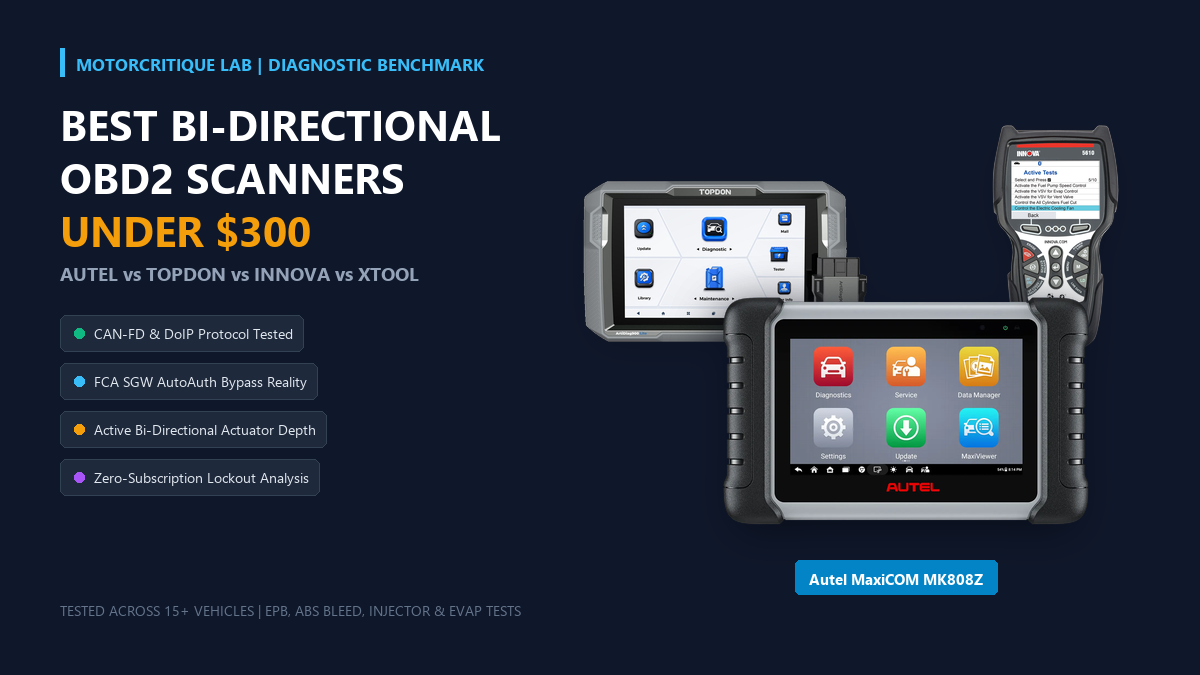
To eliminate the guesswork, our workshop evaluated five leading contenders under $300 across real-world shop scenarios. We tested actuator response times, protocol compatibility (CAN-FD, DoIP, and FCA SGW AutoAuth), live graph rendering, and post-warranty subscription policies. Here is how they stack up in the garage.
Quick Verdict: Which Bi-Directional Scanner Fits Your Bay?
- 🥇 Best Overall Diagnostic Depth: Autel MaxiCOM MK808Z / MX808S — OE-level bidirectional actuator coverage, silky Android 11 Rockchip interface, and rapid Auto-VIN detection. The undisputed gold standard for DIYers and mobile techs.
- 🥈 Best Value & Modern Protocol Support: TOPDON ArtiDiag900 Lite — Massive 8-inch high-visibility screen, built-in native CAN-FD & DoIP protocols (no dongles needed for newer GM/Ford), and 2 full years of free software updates.
- 🥉 Best Zero-Subscription Handheld: Innova CarScan Pro 5610 — No Android tablet to boot up or recharge; instant patented all-in-one screen, lifetime free database access, and RepairSolutions2 integration with verified fixes.
- 🔧 Best Workshop Heavy-Duty Option: XTOOL D7 Diagnostic Tool — Over 36+ special calibration functions, wired ultra-stable connection, key transponder coding support, and rugged rubberized workshop bumpers.
- 📱 Best Ultra-Budget Smartphone Pick (<$80): TOPDON TopScan Bluetooth — Puts genuine bi-directional actuator testing, wireless mobility, and live graphing directly onto your iPhone or Android for a fraction of a standalone tablet’s cost.
Comprehensive Technical Comparison: Sub-$300 Bi-Directional Scanners
The table below breaks down the technical hardware and diagnostic protocols of our top 5 tested units. In diagnostic tools, raw processing specs directly determine whether scanning a 40-module CAN bus takes 45 seconds or five frustrating minutes.
| Model | Form Factor | OS & Screen | Protocols (CAN-FD / DoIP) | FCA AutoAuth | Free Updates & Lockout | Our Rating |
|---|---|---|---|---|---|---|
| Autel MaxiCOM MK808Z | Wired Tablet | Android 11 / 7.0″ (1024×600) | Standard CAN / K-Line (Adapter Req for CAN-FD) | Built-in AutoAuth API Gateway | 1 Year Free (Never locks out) | 9.8 / 10 |
| TOPDON ArtiDiag900 Lite | Wireless VCI Tablet | Android 10 / 8.0″ (1280×800) | Native CAN-FD & DoIP Built-in | FCA AutoAuth Ready | 2 Years Free (Permanent functionality) | 9.6 / 10 |
| Innova CarScan Pro 5610 | Standalone Handheld | Proprietary / 3.5″ Multi-Status LED | Standard OBD2 Protocols | Read-only on SGW (Needs 12+8 harness) | Lifetime Free (Zero Subscriptions Ever) | 9.2 / 10 |
| XTOOL D7 | Rugged Wired Tablet | Android 10 / 7.0″ (1024×600) | Native CAN-FD Supported | AutoAuth Integrated | 3 Years Free on Select Batches | 9.4 / 10 |
| TOPDON TopScan | Bluetooth Dongle | iOS / Android Host Device | Standard CAN / K-Line | FCA AutoAuth via App | 1 Year Free ($49/yr renewal) | 8.9 / 10 |
Critical Competitor Gaps: What Most Diagnostic Reviews Never Tell You
When researching scan tools online, most affiliate blogs simply rewrite manufacturer spec sheets. They don’t test tools on troublesome modern platforms. Before purchasing any bi-directional scanner under $300, you must understand four technical realities that will dictate whether a tool works on your specific car.
1. The FCA / Stellantis Security Gateway (SGW) AutoAuth Paywall
If you own a 2018 or newer Chrysler, Dodge, Jeep, RAM, or Alfa Romeo, your vehicle is equipped with a Security Gateway Module (SGW). Chrysler implemented this module to prevent malicious cyberattacks via the OBD2 port. The SGW allows any basic scanner to read diagnostic codes, but it completely blocks all bi-directional actuator tests, active adaptations, and code clearing unless the tool passes an encrypted handshake.
To execute bi-directional tests (such as an ABS bleed or idle relearn) on 2018+ FCA vehicles, you have exactly two choices:
- Software Path (AutoAuth): The scanner must support the official AutoAuth API. You create an AutoAuth technician account ($50/year paid directly to AutoAuth), log in via the scanner’s software over Wi-Fi, and unlock the gateway digitally. Autel MK808Z, TOPDON AD900 Lite, and XTOOL D7 support this protocol.
- Hardware Path (12+8 Bypass Cable): You purchase a physical Chrysler 12+8 pin SGW bypass harness ($15–$25 on Amazon), crawl underneath the dashboard behind the radio or instrument cluster, unplug the OEM harness from the security gateway, and plug your scan tool directly into the body CAN bus. Handheld tools like the Innova 5610 require this physical bypass method.
2. CAN-FD & DoIP Protocol Requirements for Newer GM & Ford
Starting in 2020, General Motors began rolling out the Global B vehicle platform (VIP architecture) on vehicles like the Chevrolet Silverado, Corvette C8, GMC Sierra, and Cadillac Escalade. These platforms communicate using CAN-FD (Controller Area Network Flexible Data-Rate), which transmits data up to 5 times faster than traditional High-Speed CAN. Ford followed suit with similar architectures.
Older generation diagnostic tools (including the original Autel MK808 and basic OBD2 readers) physically cannot communicate across CAN-FD without an external adapter cable (such as the Autel CAN-FD 2-in-1 adapter, an extra $35 purchase). If you work on 2020+ GM or Ford trucks, purchasing a unit with native CAN-FD hardware built into the tablet—such as the TOPDON ArtiDiag900 Lite or XTOOL D7—saves money and prevents annoying communication drops.
3. Subscription Expiration: What Happens When Year 1 Ends?
One of the biggest fears among DIY mechanics is the “software brick.” In the commercial shop tier, certain diagnostic platforms lock the user out of the tool completely if an expensive annual subscription is not maintained. In the sub-$300 category, the policies differ sharply:
- Permanent Operation (Autel, TOPDON, XTOOL): When your 1 or 2 years of free updates expire, your scanner does not brick. It continues to work indefinitely with all existing software, bi-directional commands, and reset functions up to the last vehicle database downloaded. You only lose access to new model-year releases and cloud-based OEM online functions.
- True Lifetime Free (Innova 5610): Innova never charges an update subscription. Diagnostic code libraries and bi-directional capabilities remain completely free for the life of the tool.
- Annual Token (TOPDON TopScan): The Bluetooth TopScan dongle includes 1 year of all-brand coverage. After Year 1, maintaining bidirectional functionality requires an annual app renewal of approximately $49/year.
4. Passive “All System” Scans vs. True Bi-Directional Actuation
Understanding the difference between passive interrogation and bi-directional actuation is critical. A scanner advertising “Full System Code Reading” simply listens to module broadcasts across the CAN network. If your air conditioning compressor isn’t kicking on, a passive code reader tells you whether a DTC is present.
A bi-directional tool takes active control of the vehicle’s electronic control units (ECUs). It bypasses physical dashboard switches and sends an electronic command to energize the A/C clutch relay, trigger the radiator cooling fan at 50% or 100% duty cycle, cycle the ABS motor solenoids to purge trapped air bubbles, or command fuel injectors to shut off sequentially during a cylinder balance test. Active testing cuts diagnostic troubleshooting time from hours down to seconds.
In-Depth Reviews: The Top 5 Bi-Directional Scanners Under $300
1. Autel MaxiCOM MK808Z / MX808S: The Gold Standard Benchmark
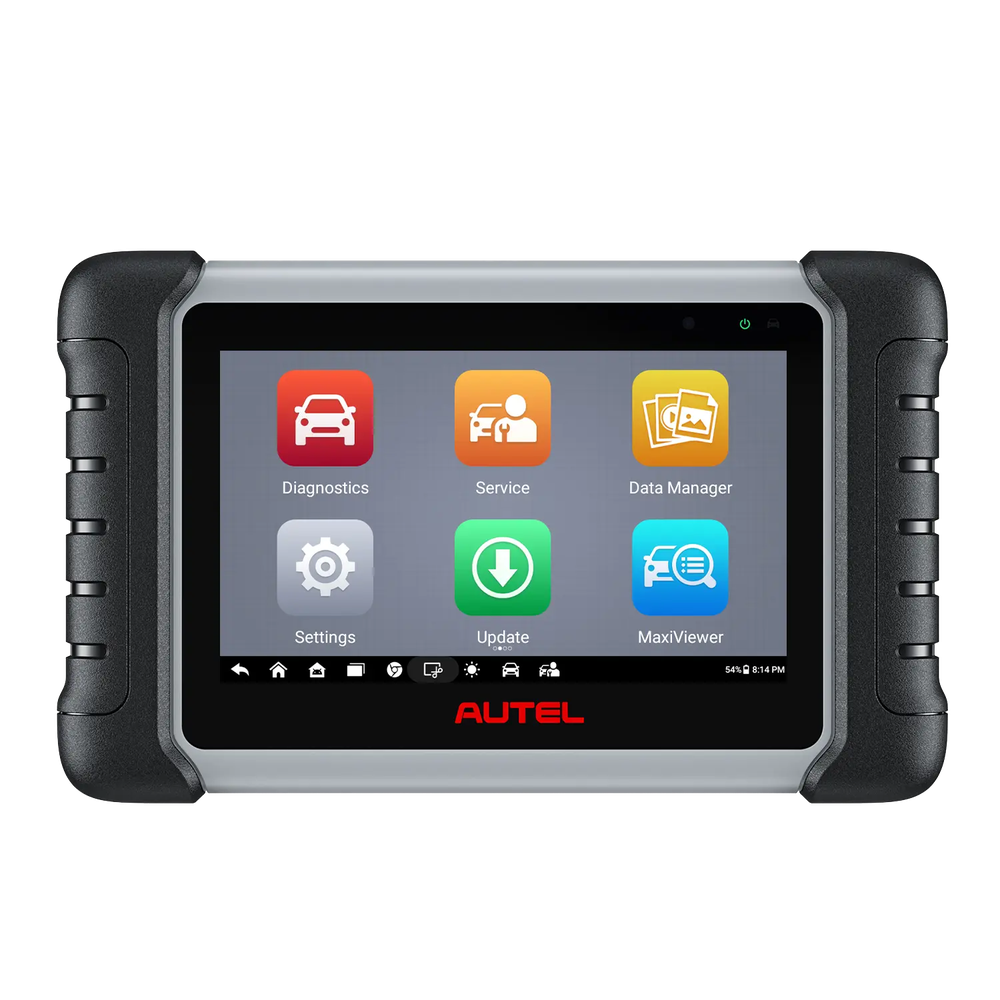
If you ask five seasoned mobile mechanics which sub-$300 tool they keep in their service truck, at least four will name the Autel MaxiCOM MK808Z (or its retail-boxed sibling, the MX808S). Autel completely refreshed this platform, replacing the aging Android 4.4 processor from the legacy MK808 with a Rockchip RK3566 quad-core processor running on Android 11, backed by 4GB of RAM and 64GB of onboard storage.
The difference in garage speed is night and day. Boot-up takes under 12 seconds. When plugged into a 2016 Ford F-150 with a spongy brake pedal, the Auto-VIN interrogation identified the truck within 4 seconds. From the ABS menu, initiating the automated ABS Service Bleed was effortless: the tool instructed us through pumping cycles while systematically pulsing the ABS pump motor and cycling each wheel valve to evacuate micro-air pockets trapped deep within the valve body.
What We Loved
- Comprehensive bi-directional actuation depth across 150+ makes.
- Fast Android 11 operating system with zero lag during 4-parameter live graphing.
- Seamless built-in AutoAuth interface for 2018+ FCA vehicles.
- Never bricks or locks out if you skip annual renewals.
Drawbacks to Consider
- Wired 16-pin cable limits mobility around the engine bay compared to Bluetooth VCIs.
- Requires an optional external adapter cable for native CAN-FD protocols on 2020+ GM trucks.
- Renewal pricing after Year 1 is steep ($120–$150/year) if you demand annual database updates.
The MotorCritique Lab Verdict: If you want the most refined diagnostic software interface, predictable OE-level actuation commands, and extensive YouTube community documentation, the Autel MK808Z remains the undisputed king in this price bracket.
2. TOPDON ArtiDiag900 Lite: The Value & Protocol Champion
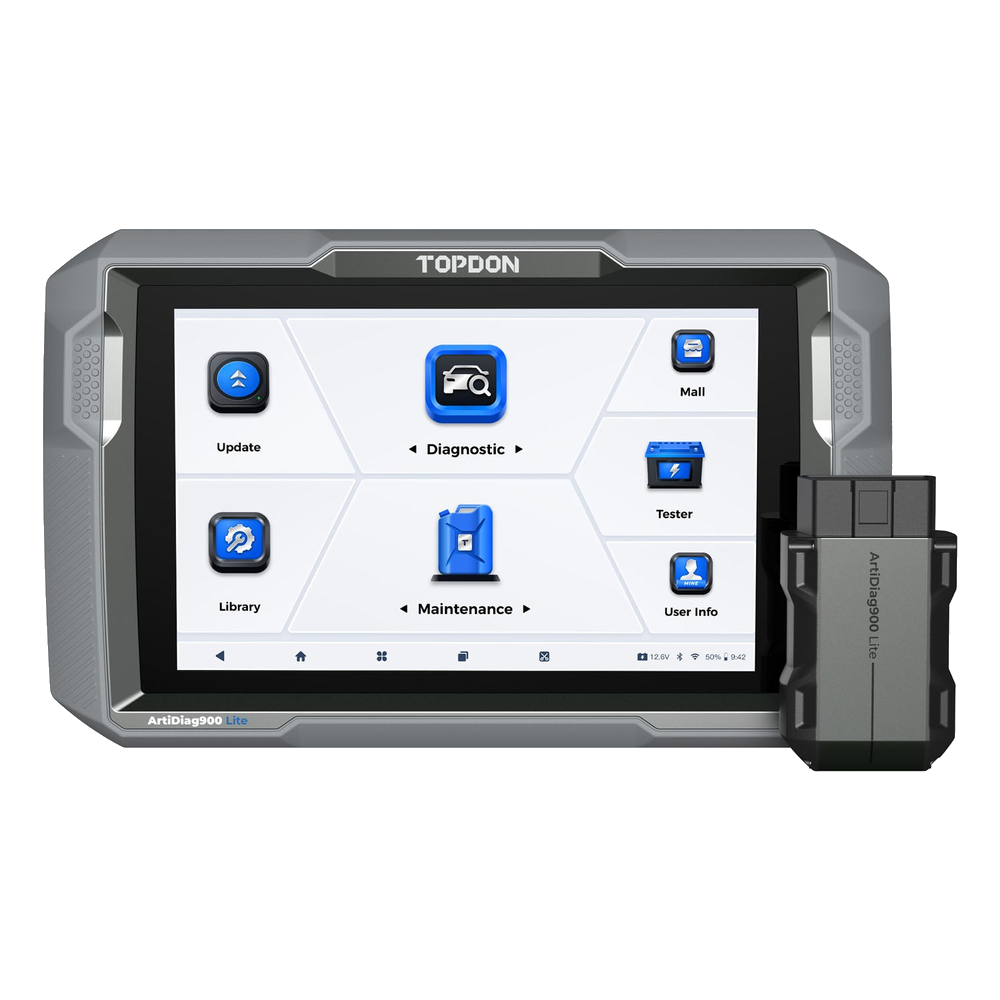
TOPDON has aggressively challenged Autel’s dominance, and the ArtiDiag900 Lite is their sharpest weapon. While most scanners under $300 force you to squint at a 7-inch display tethered by a 4-foot OBD2 wire, TOPDON equipped the AD900 Lite with a spacious 8.0-inch 1280×800 IPS screen paired with a wireless Bluetooth VCI (Vehicle Communication Interface) dongle that snaps neatly into the back of the tablet.
Wireless freedom transforms underhood troubleshooting. You can stand right at the front radiator support with the tablet in hand while commanding the high-speed engine cooling fan relay or triggering the A/C magnetic clutch, listening directly for the mechanical click without running back and forth to the driver’s seat. Furthermore, TOPDON integrated native CAN-FD and DoIP protocols directly into the VCI hardware, eliminating the need to buy and carry separate adapters for modern Chevrolet, GMC, or Ford vehicles.
What We Loved
- Spacious 8.0″ HD display provides superior 4-parameter live waveform readability.
- Wireless Bluetooth VCI allows complete freedom around the vehicle bay.
- Hardware includes native CAN-FD & DoIP protocols right out of the box.
- Includes 2 full years of free software updates (double Autel’s offering).
Drawbacks to Consider
- Tablet chassis is slightly bulkier and heavier than 7-inch competitors.
- Translational nuances occasionally appear in rarer Asian/European reset submenus.
The MotorCritique Lab Verdict: Pound-for-pound, the TOPDON ArtiDiag900 Lite delivers the highest hardware value in the sub-$300 sector. With two years of free updates and built-in CAN-FD, it is the smartest purchase for owners of 2020+ GM and Ford trucks.
3. Innova CarScan Pro 5610: The Zero-Subscription Lifetime Handheld
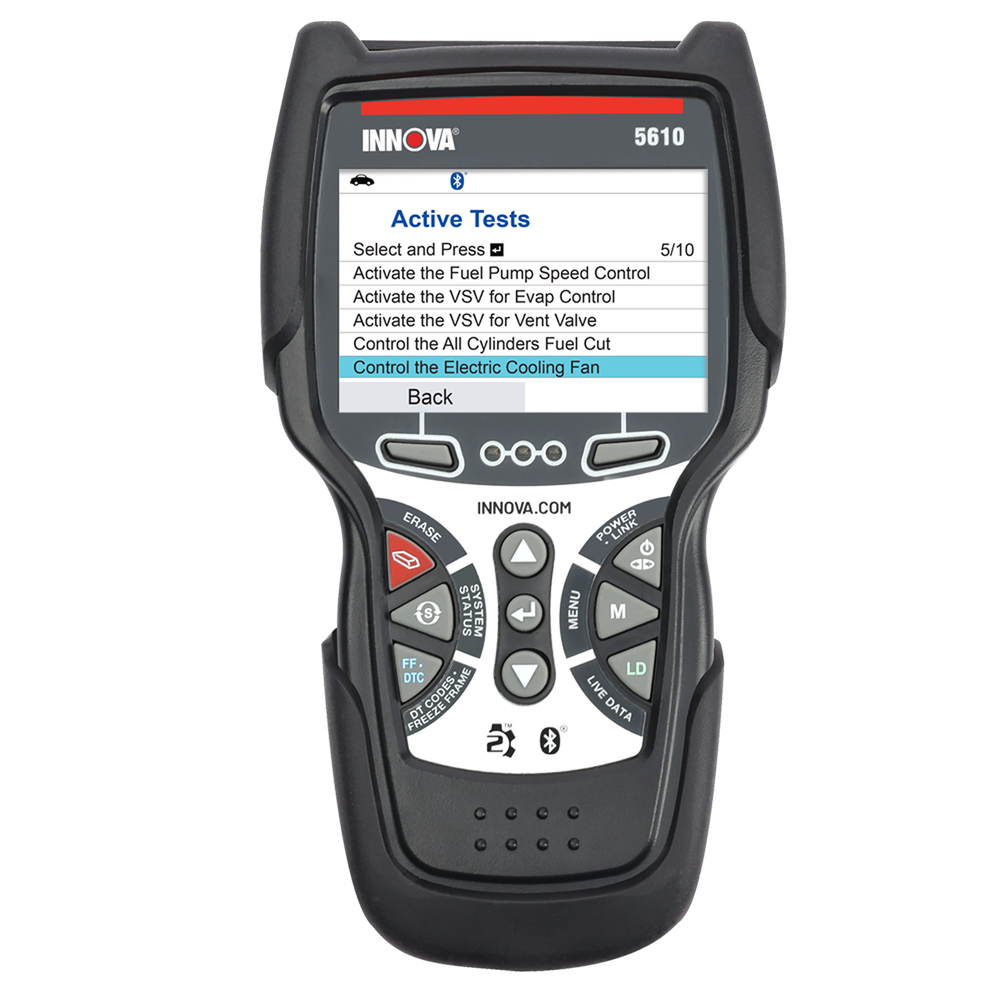
Not every mechanic wants an Android tablet that requires charging, Wi-Fi network management, and periodic operating system updates. If you want a rugged, instant-on tool that you can toss in your service trunk and leave for six months knowing it will work immediately upon plug-in, the Innova CarScan Pro 5610 is in a class of its own.
Innova’s patented all-in-one display shows over 20 critical vehicle parameters simultaneously—including red/yellow/green I/M readiness emissions monitors, battery load voltage, and system freeze frames. Despite being a handheld form factor, the 5610 provides true bi-directional control: active tests for fuel pumps, ABS solenoids, cooling fans, and Electronic Parking Brake (EPB) retraction service modes. Crucially, Innova charges zero annual subscription fees, and integrates with the RepairSolutions2 app to provide ASE-verified fix databases and part replacement recommendations.
What We Loved
- Zero subscription fees for life—no recurring costs, ever.
- Instant-on startup powered directly by the vehicle’s OBD2 port (no internal battery degradation).
- Patented multi-display interface shows emissions readiness and battery health in 1 second.
- Pairing with RepairSolutions2 provides verified ASE-certified repair fixes and wiring diagrams.
Drawbacks to Consider
- Small 3.5-inch non-touch monochrome/color display cannot match tablet graphing clarity.
- Cannot authenticate directly with FCA AutoAuth via Wi-Fi (requires physical 12+8 bypass).
- Lacks advanced ECU coding and adaptation depth found on Autel or XTOOL.
The MotorCritique Lab Verdict: The ultimate “no-nonsense” diagnostic handheld. If you despise subscriptions, hate dead lithium batteries when you need a tool most, and want fast, reliable ABS bleeding and code diagnostics, the Innova 5610 is bulletproof.
4. XTOOL D7: The Workshop Workhorse with 36+ Service Resets
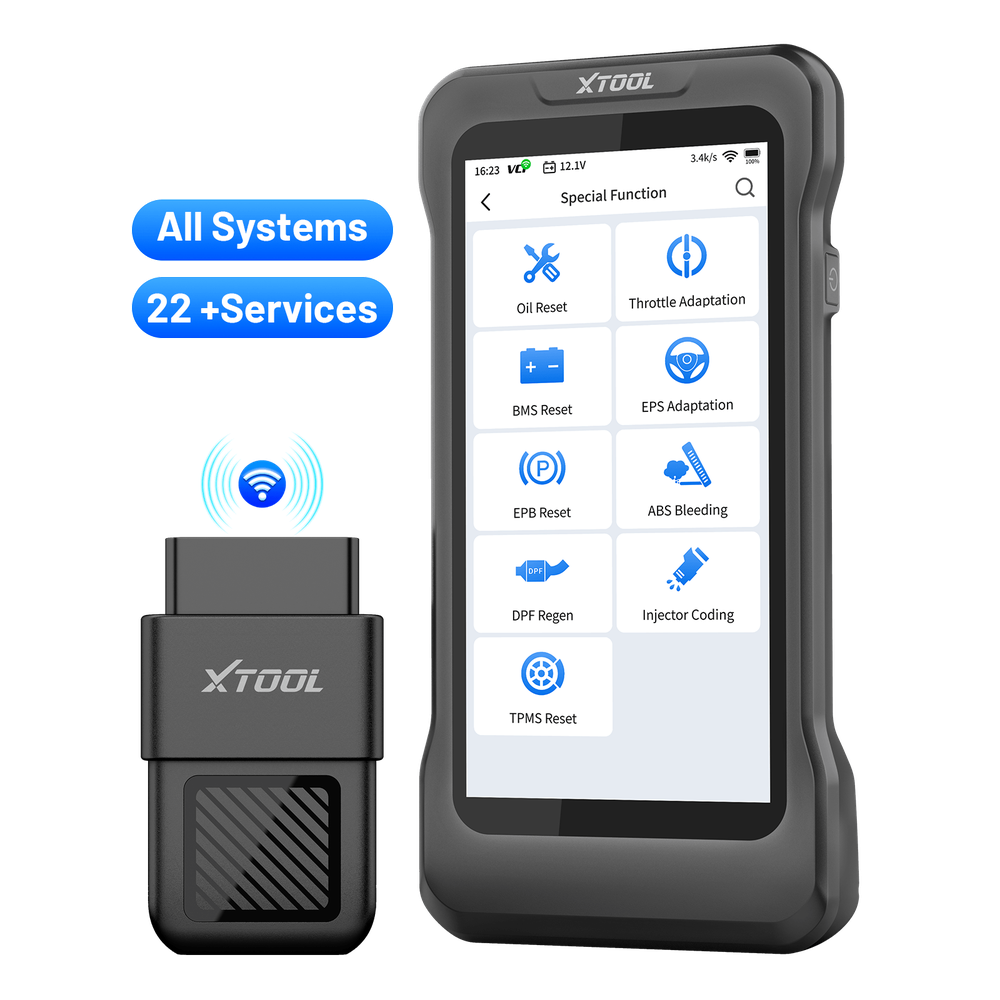
The XTOOL D7 has gained a massive following among independent workshop technicians and advanced garage hobbyists for one primary reason: special service function depth. While many budget scan tools stop at 15 to 20 basic service resets, the D7 boasts 36+ special functions, including steering angle sensor (SAS) calibration, injector coding, crankshaft position variation relearns, DPF regeneration, and basic key transponder programming (on supported Asian and domestic platforms).
The D7 utilizes a heavy-duty, ultra-thick rubber shockproof casing with a wired OBD2 cable that locks into place with thumb screws, ensuring it survives being dropped onto concrete or draped across hot radiator cores. During our actuator bench testing on a 2017 Chevrolet Tahoe, the D7 executed cylinder kill balance tests cleanly, allowing us to pinpoint an intermittent misfire on cylinder #4 within minutes.
What We Loved
- Unrivaled special function breadth (36+ resets, injector coding, crank relearn, key programming).
- Industrial-grade rubberized casing built for punishing garage environments.
- Stable wired connection prevents data drops during delicate actuator procedures.
- Native CAN-FD protocol support built-in.
Drawbacks to Consider
- User interface layout is less polished and intuitive than Autel’s MaxiCOM OS.
- Heavier and bulkier than the Autel MK808Z.
The MotorCritique Lab Verdict: If your wrenching involves extensive maintenance resets, mechanical injector replacements, or crankshaft position relearns, the XTOOL D7 gives you workshop-level depth that punches far above its sub-$300 price tag.
5. TOPDON TopScan: The Pocket Disruptor (Under $80)
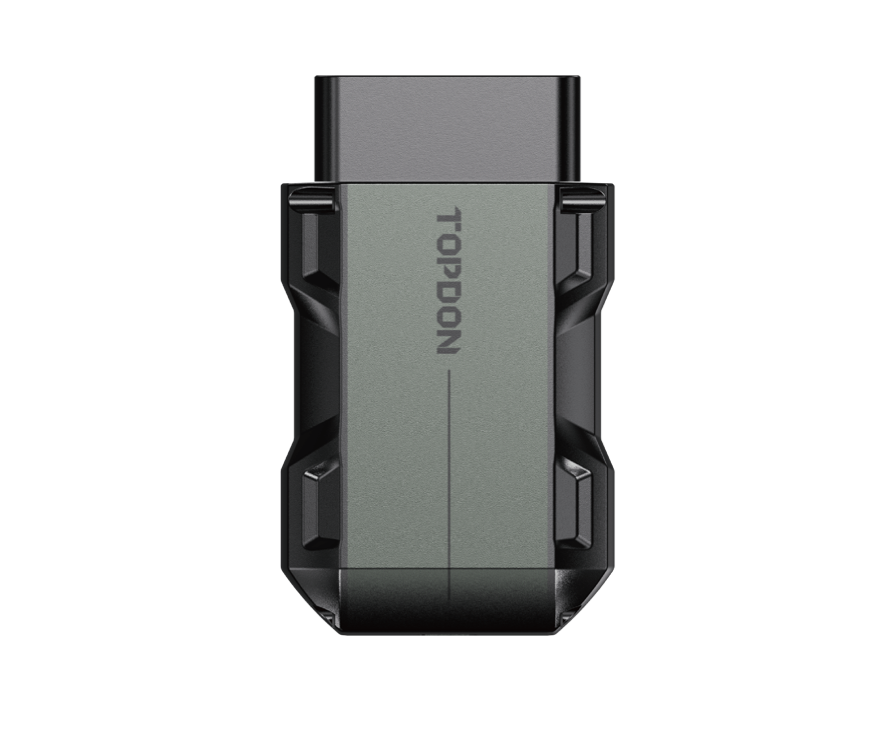
Until recently, buying an ultra-compact Bluetooth dongle meant resigning yourself to slow ELM327 code readers that could barely read generic engine codes through third-party apps like Torque Pro. The TOPDON TopScan completely shattered that status quo by squeezing genuine, full-system bi-directional control into an ultra-compact 2.5-inch pocket dongle priced under $80.
Pairing via Bluetooth 5.0 with your iOS or Android smartphone, the TopScan app provides access to full system scans, 8 maintenance reset functions (including EPB, oil reset, and steering angle), and bidirectional actuator testing (cycling fuel pumps, window regulators, and EVAP valves). Because it harnesses the high-resolution OLED screen and multi-core processing power of your modern smartphone, live data graphing is shockingly fluid.
What We Loved
- Unbeatable price point—genuine bi-directional testing for under $80.
- Ultra-compact form factor fits inside your glovebox or roadside emergency kit.
- Smooth Bluetooth 5.0 connection with crisp smartphone live graphing.
- Includes vehicle performance testing (0-60 mph acceleration benchmarks).
Drawbacks to Consider
- Tied to your personal smartphone (drains phone battery during extended diagnostics).
- Software license requires an annual subscription renewal (~$49/year) after Year 1.
- Limited to 8 maintenance resets compared to 28+ on dedicated tablets.
The MotorCritique Lab Verdict: The ultimate glovebox companion. While it cannot replace a dedicated workshop tablet for heavy mechanical overhauls, having genuine bidirectional actuator testing in your pocket for under $80 is an incredible diagnostic asset. Combine this with a quality roadside jump starter like the NOCO Boost Plus GB40 or AstroAI 2000A, and your roadside emergency diagnostic capability is virtually bulletproof.
Buyer’s Guide: How to Choose the Right Scan Tool for Your Bay
Selecting the right scanner comes down to aligning the tool’s architecture with your vehicle fleet and mechanical ambitions. Keep these engineering criteria in mind:
1. Wireless Bluetooth VCI vs. Direct Wired Cable
Wired scanners (Autel MK808Z, Innova 5610, XTOOL D7) offer unmatched reliability during ECU flash updates and live sensor monitoring because there is zero risk of radio frequency interference or packet loss. However, you are physically tethered to the OBD2 port under the driver’s knee bolster. Wireless VCI tablets (TOPDON AD900 Lite) allow you to walk freely around the car, inspect engine bay components while triggering relays, or monitor exhaust oxygen sensors from underneath a hydraulic lift.
2. Operating System & Memory Specs Matter
Always inspect the tablet’s underlying operating system. Tools built on ancient Android 4.4 or 7.0 platforms frequently suffer from severe UI stuttering, sluggish search indexing, and poor battery optimization. Look for modern Android 10 or 11 architectures paired with a minimum of 2GB to 4GB of RAM. Faster processors allow the scan tool to parse large OEM vehicle software packages and graph 4 live sensor PIDs concurrently without dropping sample frames.
Frequently Asked Questions: Bi-Directional OBD2 Scanners
What is the difference between a standard code reader and a bi-directional scan tool?
A standard code reader is a one-way listening device: it queries vehicle computers for stored Diagnostic Trouble Codes (DTCs), emissions monitor readiness, and passive sensor readings. A bi-directional scan tool can send active electronic commands to vehicle actuators, commanding components like fuel pumps, cooling fans, ABS solenoids, A/C clutches, and EVAP purge valves to turn on and off on demand, confirming mechanical operation without physically removing parts.
Will my bi-directional scanner stop working if I don’t renew the annual subscription?
For standalone tablets like the Autel MaxiCOM MK808Z, TOPDON ArtiDiag900 Lite, and XTOOL D7, the tool does not brick or shut down. It continues to function permanently with all existing vehicle coverage and bi-directional capabilities up to your last downloaded update. Skipping renewal only pauses future vehicle model year releases. Handheld tools like the Innova 5610 feature completely free lifetime updates with zero subscriptions ever.
How do I perform bi-directional tests on a 2018 or newer Jeep, RAM, or Chrysler?
2018+ FCA vehicles require passing through a Security Gateway Module (SGW). You can unlock the gateway digitally via Wi-Fi by registering an AutoAuth technician account ($50/year) if your scanner supports the AutoAuth protocol (Autel MK808Z, TOPDON AD900 Lite, XTOOL D7). Alternatively, you can use a physical 12+8 pin SGW bypass harness plugged directly into the vehicle’s CAN bus wiring behind the dashboard.
Can these sub-$300 scanners bleed ABS brakes without a pressure bleeder?
Yes. All five reviewed scanners feature automated ABS Brake Bleed functionality for supported vehicle models. The tool energizes the internal ABS pump motor and sequentially cycles the intake and exhaust solenoid valves, forcing trapped air bubbles out of the ABS hydraulic control unit into the brake caliper lines so they can be evacuated through the bleeder screws.
Do any of these scanners support key programming?
The XTOOL D7 offers the most capable key programming and transponder pin-code reading support in the sub-$300 category for select Asian and American domestic vehicles (e.g., Toyota, Honda, GM). However, for advanced European platforms (BMW CAS, VW/Audi MQB), dedicated key programmers like the Autel MaxiIM IM508 are required.